How to Actually Tell If You Have a Long Torso (Not Just Long Legs)
Quick Answer: Measure from the top of your shoulder to your natural waist, and separately from your natural waist to the floor — if the shoulder-to-waist measurement is proportionally larger than average relative to your total height, you likely have a long torso, distinct from simply having long legs.
A lot of proportion advice lumps ‘long torso’ and ‘long legs’ together as if they’re the same body type, but they call for opposite styling adjustments — which is exactly why generic proportion advice so often misses the mark for one or the other.

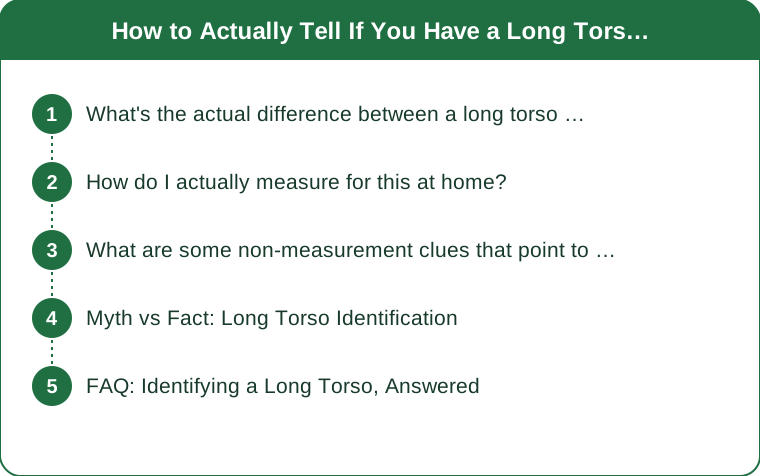
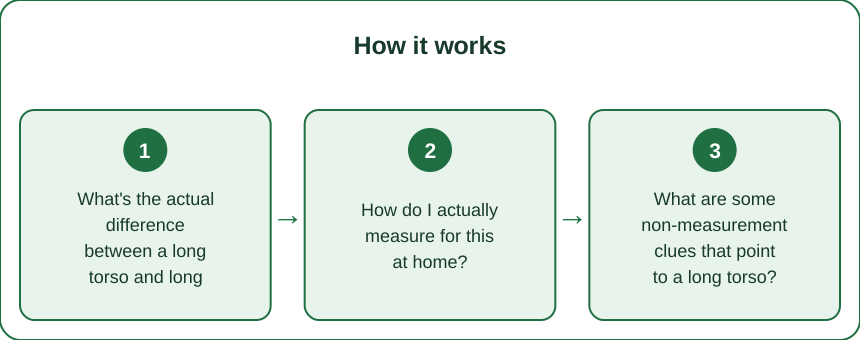
What’s the actual difference between a long torso and long legs?
A long torso means the distance from shoulder to natural waist is proportionally longer relative to your height, while long legs means the distance from waist to floor is proportionally longer. It’s entirely possible to have one without the other — someone can have a long torso and average-length legs, or vice versa, which is why they need genuinely different styling approaches rather than one generic ‘long limbs’ fix.
How do I actually measure for this at home?
Stand naturally and measure from the top of your shoulder to your natural waist (the narrowest point of your torso, usually just above the belly button), then separately measure natural waist to the floor. Compare the two against your total height — if the torso measurement takes up a larger share of your total height than roughly 40%, that’s a signal toward a proportionally longer torso.

What are some non-measurement clues that point to a long torso?
A few common signals: high-rise pants that feel like they sit lower than intended, swimsuits and bodysuits that feel snug through the crotch even in the right size, and belts that seem to sit lower on you than on friends of similar height. These aren’t definitive on their own, but they’re common enough patterns that they’re worth noting alongside the measurement.
Myth vs Fact: Long Torso Identification
Myth: If you’re tall, you probably have both a long torso and long legs. Fact: Height alone doesn’t determine proportion — plenty of tall people have average or even shorter-than-average torsos with most of their height concentrated in the legs, and vice versa.
Myth: A long torso always means a shorter overall rise in pants. Fact: It’s actually the opposite — a long torso often needs a higher rise, not lower, to hit the natural waist correctly instead of sitting below it.
FAQ: Identifying a Long Torso, Answered
Is there a specific ratio that defines ‘long torso’?
There’s no single universal cutoff, but a torso-to-height ratio noticeably above the roughly 38-40% average range is a common informal marker used in fit and sizing discussions.
Can I have a long torso and still be considered short overall?
Yes — proportion and total height are independent; a shorter person can have a long torso relative to their own height just as easily as a taller person can.
Does this proportion actually change how clothes should be sized for me, or is it just aesthetic preference?
Both — beyond aesthetics, an accurate read on torso length affects genuine fit issues like rise comfort, bodysuit and swimsuit crotch fit, and where a waistband naturally sits, which is a functional fit problem, not just a style one.
TL;DR:
- Long torso and long legs are separate proportions that call for different styling fixes
- Measure shoulder-to-waist versus waist-to-floor to compare against your total height
- Low-feeling high-rise pants and snug bodysuit fit are common long-torso clues
- A long torso typically needs a higher rise, not a lower one, to fit correctly
Knowing which proportion you’re actually working with makes fit advice far more useful than generic ‘long-limbed’ tips.
Keep Reading
This article is for general informational and styling purposes only. Fit, sizing, and product availability may vary.
