Why Jacket Hems Never Sit Right on a Long Torso
Quick Answer: Jackets are graded by chest and shoulder measurements, and body length is scaled proportionally from those numbers. On a long torso, the shoulders fit correctly while the hem lands 5 to 8 centimetres higher than the designer intended, turning a hip-length blazer into a waist-length one. The fix is choosing styles where hem position is not structural - open-front, longline, and shirt-jackets - and sizing up in length rather than width by shopping tall ranges.
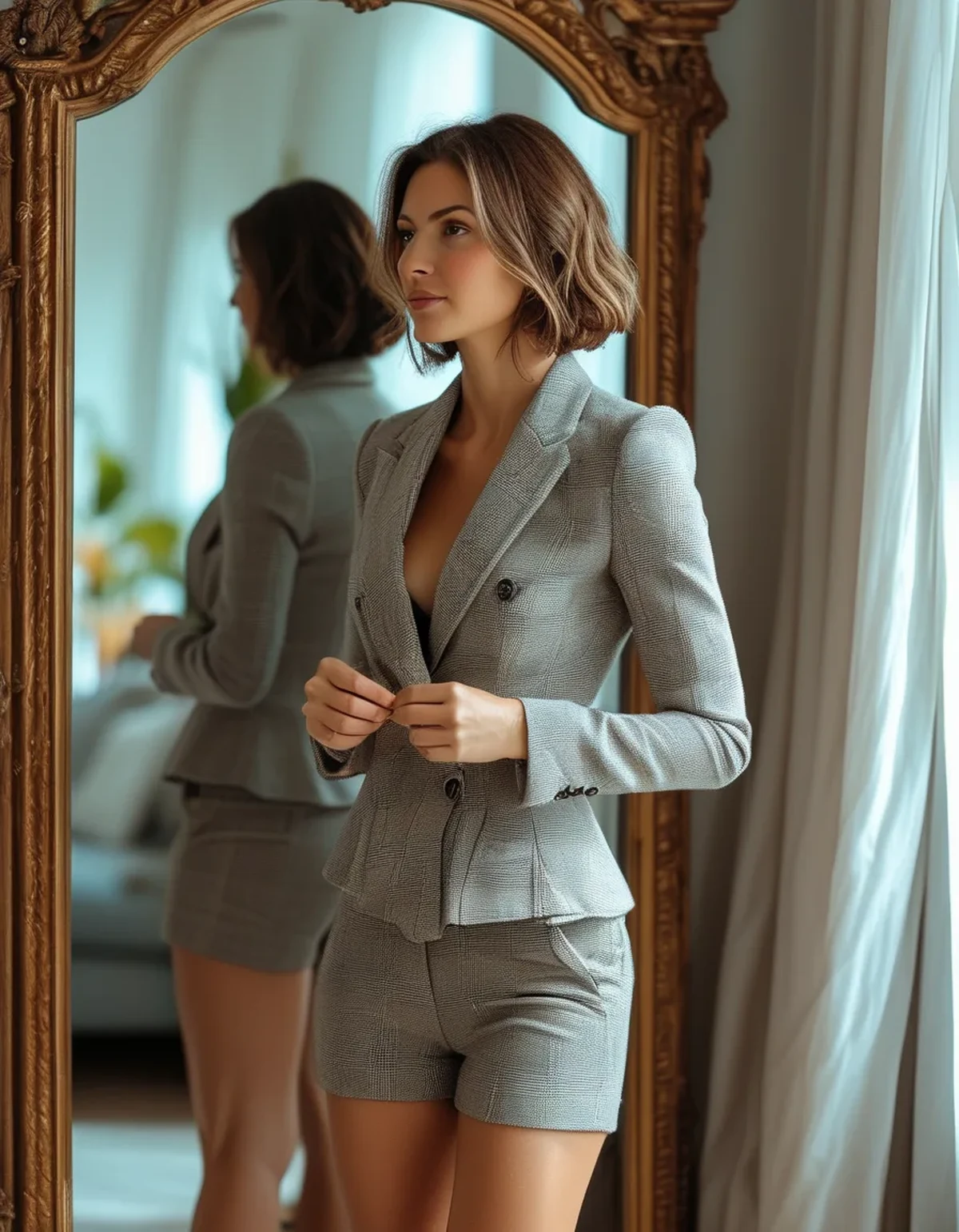
The blazer fits perfectly across the shoulders, the sleeves are the right length, and the hem sits somewhere around your ribs looking like a mistake.
Why does the hem land in the wrong place?
Because of how garments are graded, which is a manufacturing decision rather than a design one.
Sizing is driven by circumference, not by length. A size 12 jacket is defined primarily by chest and waist measurements. Body length is then calculated from a standard proportion assumed to accompany that chest measurement.
The assumed proportion is an average. Standard blocks assume a torso length that suits the statistical middle. A torso 5 centimetres longer than average puts the hem 5 centimetres higher on the body, with everything else fitting correctly.
Which is why sizing up does not help. Going up a size adds perhaps 1.5 centimetres of length while adding several centimetres of width. You end up with a jacket that is loose everywhere and still too short.
The hem position is what defines the style. A blazer is designed to end at a specific point relative to the hip - covering it, sitting at it, or cropping above it. When that point shifts, the garment reads as a different, less deliberate style.
Armhole depth compounds it. Long torsos frequently come with a longer upper body section too, so the armhole can sit high and restrict movement even when the shoulder seam is correct.
And the waist button lands wrong. On a single-button blazer, the button position is engineered to sit at the natural waist. Higher up, it pulls oddly and produces the distinctive flare below the button that makes a jacket look ill-fitting even to people who cannot say why.
Which styles work and which never will
Some jackets are far more forgiving of the problem than others.
Open-front and collarless styles work well. With no button to place, there is no wrong closure point, and the eye reads the vertical opening rather than the horizontal hem.
Longline and duster styles are the most reliable choice. A jacket designed to end mid-thigh has enough length in hand that losing 6 centimetres still leaves it below the hip.
Shirt jackets and overshirts are forgiving. They are meant to be worn loose and untucked, so the exact hem position is not doing structural work.
Deliberately cropped jackets are worth reconsidering. If a cropped jacket is going to become extremely cropped on you, it can either be an unflattering accident or a deliberate choice - and paired with high-rise trousers, the second reading is available.
Single-button tailored blazers are the hardest. Everything about them depends on the button hitting the natural waist, and there is no way to compensate through styling.
Bomber jackets are surprisingly difficult too. The elasticated hem is designed to sit at the hip; higher up, it grips the waist and creates a blousing effect that reads as the wrong size.
And peplum styles are usually best avoided. The flare point is engineered to a specific waist position, and when it sits high the proportions become genuinely awkward.
What Nobody Tells You About Buying for a Long Torso
Tall ranges are about length, not height. This is the single most useful thing to know. Tall sizing adds body and sleeve length, and it is the correct range for a long torso even at average overall height. You may need to have the sleeves shortened, which is a cheap and easy alteration.
Sleeve length is easy to alter, body length is not. Shortening sleeves on most jackets costs relatively little. Lengthening a body is usually impossible. Buy for the body length and alter the sleeves.
Petite ranges are the enemy in disguise. Someone of average height with a long torso frequently has shorter legs, which pulls them toward petite trousers - and if they buy the matching petite jacket, the fit problem doubles.
Check the back length measurement, not the size label. Many brands publish centre-back length in their size guides. Measuring your own from the base of the neck to where you want the hem, and comparing it directly, is far more reliable than trying things on hopefully.
Menswear-inspired and oversized cuts run longer. Not always, but frequently, and the relaxed intent means a hem sitting slightly high still looks correct.
Two brands, same size, different length. Body length varies substantially between labels because each uses its own block. Once you find a brand whose length works, that information is worth more than any styling tip.
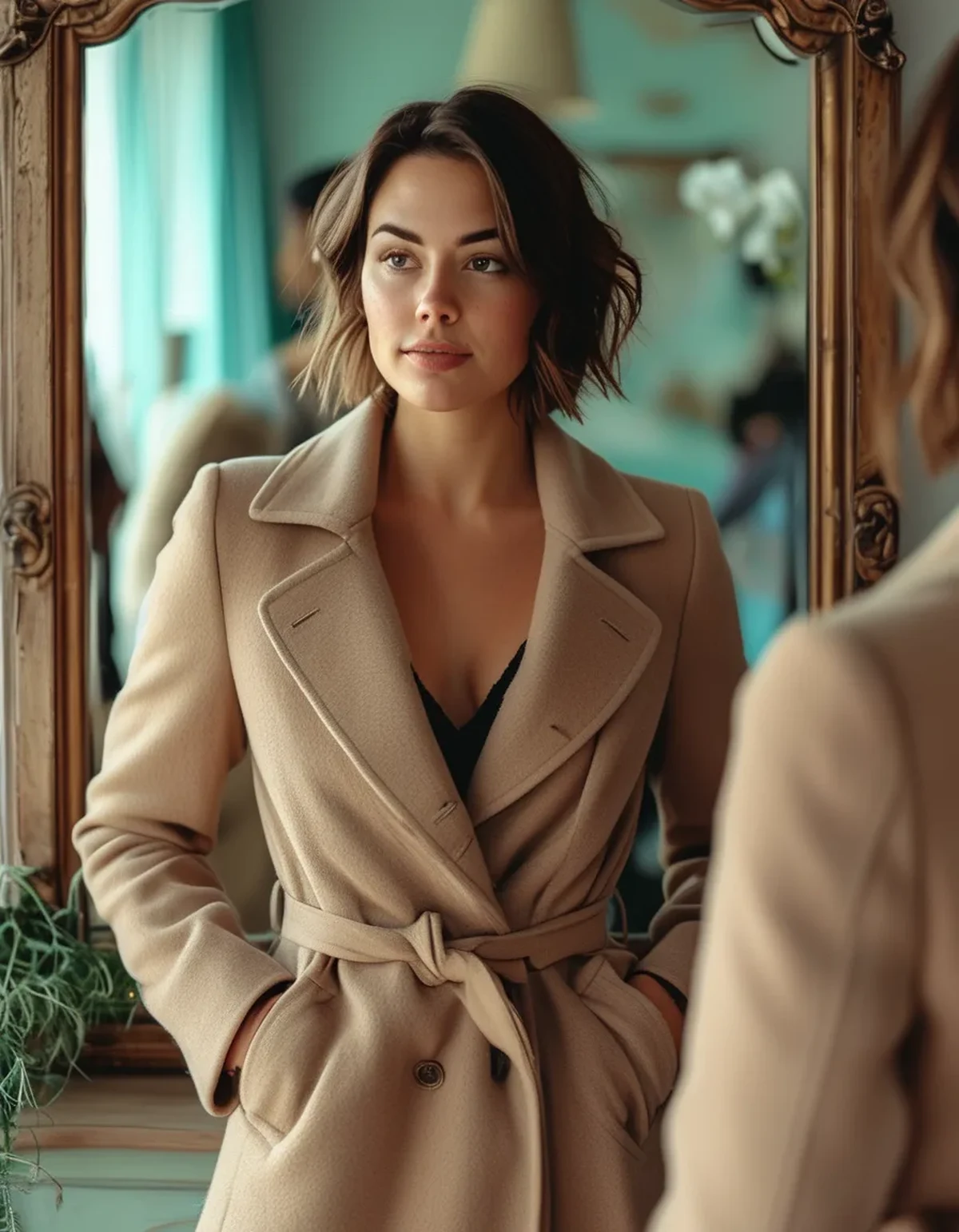
And the mirror is misleading on this specifically. Hem position is far more obvious in a full-length photograph than in a mirror, because you assess a photo the way other people see you.
Styling around a hem that sits high
When the jacket is otherwise right, a few things help.
Pair with high-rise bottoms. If the jacket hem sits at the natural waist, high-rise trousers meet it there, and the outfit reads as an intentional cropped-jacket look rather than a length error.
Avoid a gap between hem and waistband. A visible band of top between the two is what makes it look accidental. Either they meet, or the jacket is clearly long over the waistband.
Match the top underneath to the trousers. This creates a continuous column and makes the jacket read as a layer over the outfit rather than a piece that ends too soon.
Use the vertical opening deliberately. Worn open with a straight, uninterrupted line down the front, the eye follows the vertical and the hem position matters less.
Choose longer tops underneath. A tunic-length top extending past the jacket hem creates a deliberate layered look and removes the sense that something ended prematurely.
Skip the belt over the jacket. It emphasises the waist position that is already the problem area.
And judge it in a photograph from three metres. Every proportion question resolves at distance, and almost none of them resolve at arm’s length in a changing room mirror.
FAQ: Long Torso Jacket Fit Questions, Answered
Why are jacket hems always too short on me?
Because jackets are graded from chest and shoulder measurements, with body length scaled to an assumed average torso. A longer torso puts the hem several centimetres higher while everything else fits correctly.
Should I size up to get more jacket length?
No. Sizing up adds roughly 1.5 centimetres of length and several centimetres of width, leaving a jacket that is loose everywhere and still short. Shop tall ranges instead.
Are tall sizes only for tall people?
No - tall ranges add body and sleeve length, which is exactly what a long torso needs regardless of overall height. Having the sleeves shortened afterwards is a cheap alteration.
Which jacket styles suit a long torso best?
Open-front, longline, duster, and shirt-jacket styles, because none of them depend on the hem or button landing at an exact point. Single-button tailored blazers and bomber jackets are the hardest.
Can a jacket be lengthened by a tailor?
Rarely. There is usually not enough fabric in the hem allowance, and the lining and pockets constrain it further. Sleeves shorten easily; bodies do not lengthen.
TL;DR:
- Jackets are graded by chest, with length scaled to an average torso - so yours fits everywhere except the hem.
- Sizing up adds width, not length. Tall ranges add length, and they are not only for tall people.
- Choose open-front, longline, and shirt-jacket styles; avoid single-button blazers and bomber hems.
- Pair with high-rise bottoms so the hem meets the waistband instead of leaving a gap.
- Compare centre-back length measurements between brands - it is the most useful number available.
The jacket is not the wrong size. It was drafted for a torso that is not yours, and the tall rail is where they keep the right one.
Keep Reading
This article is for general informational and styling purposes only. Fit, sizing, and product availability may vary.
